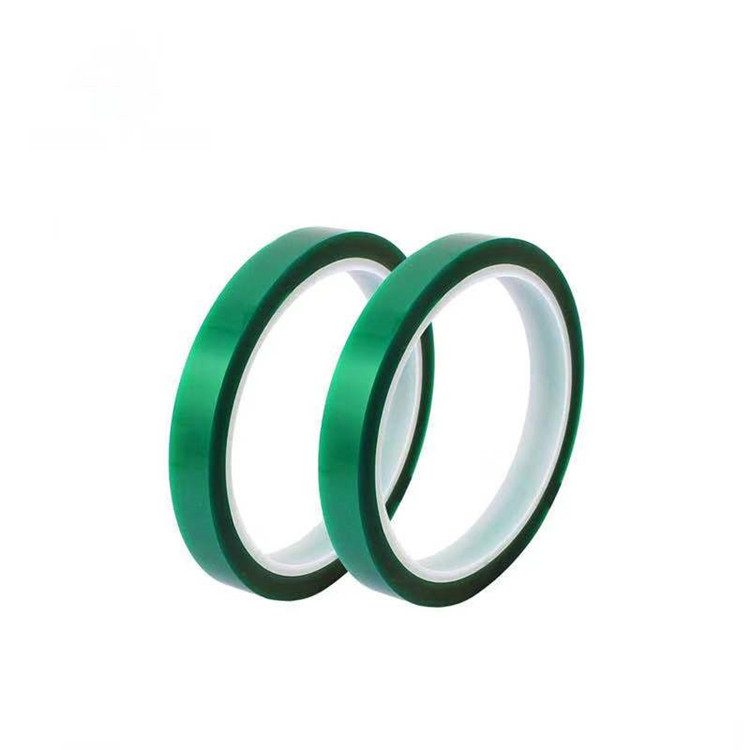
With the rapid development of the chemical industry, many new materials have emerged. The most common one is PTFE high-temperature tape, which has a very smooth surface and excellent anti stick..
2025-11-04High temperature tape usually refers to adhesive materials that can maintain good adhesion under certain high temperature environments, mainly including single-sided tape and double-sided tape...
2025-11-04Polyimide (PI) has a wide range of applications, mainly including the following aspects: 1.Aerospace: Polyimide has important applications in the aerospace field. Due to its excellent ther..
2025-11-04How to choose high temperature resistant tape suitable for your industry?
When choosing high-temperature resistant tape suitable for your industry, you need to consider the following key factors to ensure that the selected tape can meet the specific needs of the industry: Temperature tolerance: Determine the required temperature tolerance based on the industry application environment. The working temperature range varies greatly among different industries, so when choosing high-temperature adhesive tape, the first step is to determine the maximum temperature that the tape can withstand. Generally speaking, the temperature range that high-temperature adhesive tape can withstand is between -40 ℃ and 1000 ℃, but the specific range depends on the type and brand of the tape. Material characteristics: Select adhesive tape with specific material properties according to industry requirements. For example, certain industries may require tape to have good chemical or corrosion resistance. Common high-temperature resistant tape materials include polyimide, silicone, glass fiber, and fluoroplastics, each of which has different characteristics such as heat resistance, insulation, corrosion resistance, etc. viscosity: Ensure that the selected tape can firmly adhere to the desired surface and remain stable in high temperature environments. Choose tape with strong adhesion and high temperature resistance to ensure that it does not lose its adhesion at high temperatures. Size: Choose the appropriate tape width and length based on specific application requirements. Different industries and application scenarios may require different sizes of tape, so it is necessary to choose according to the actual situation. Additional features: Choose the appropriate tape width and length based on specific application requirements. Different industries and application scenarios may require different sizes of tape, so it is necessary to choose according to the actual situation. In summary, choosing a high-temperature resistant tape suitable for one’s own industry requires consideration of multiple factors such as temperature tolerance, material properties, viscosity, size, and additional characteristics. By considering these factors comprehensively, one can choose the most suitable high-temperature resistant tape for their industry needs.High temperature adhesive tape
High temperature tape refers to adhesive tape used in high-temperature working environments. Mainly used in the electronics industry, the temperature resistance performance is usually between 120 degrees and 260 degrees. basic content High temperature adhesive tape High temperature tape refers to adhesive tape used in high-temperature working environments. Mainly used for electronic industry applications, the temperature resistance performance is usually between 120 ° C and 260 ° C, Teflon high-temperature tape Commonly used for painting, baking leather processing, coating masking, fixing in electronic component manufacturing processes, printing circuit boards, and high-temperature treatment masking. High temperature tape includes KAPTON high-temperature tape; Teflon high-temperature adhesive tape; High temperature textured paper tape; PET green high-temperature tape; High temperature double-sided tape, etc. Teflon high-temperature adhesive tape has the following characteristics:Non sticky;High and low temperature resistance, the product can withstand temperatures up to 260 ℃ for long-term use;Corrosion resistance;Low friction and wear resistance;High moisture resistance and insulation; At present, the conventional product thickness is 0.13mm, 0.18mm0.25mm, and there are three colors: brown and black. Teflon high-temperature tape is mainly used for:Insulation coating for wire and cable industry;Insulation lining for electric oxygen industry;The surface coating of the storage tank roller and the lining of the guide rail friction surface can be directly attached to various large surfaces and regular curved surfaces (such as rollers), with simple operation, eliminating the need for professional equipment, special processes, and transportation to professional spraying factories for spraying PTFE materials;Used as insulation high-temperature material in textile, food, pharmaceutical, wood processing and other sectors;Color printing packaging machines, plastic weaving and drawing machines, microwave drying, various conveyor belts, and bag making machines for clothing hot stamping, adhesive sealing, and packaging industries, as well as hot pressing sealing end faces for sealing machines. Storage, transportation, and maintenance of high-temperature adhesive tape (1) Tape should be stored in the warehouse to avoid direct sunlight and rain; Do not come into contact with acidic, alkaline, oil or organic solvents, keep clean and dry, and keep a distance of 1 meter from the discovery device. The room temperature should be between -15 ℃ and 40 ℃. (2) The tape should be placed in rolls without folding. If stored for too long, it should be flipped once every season. (3) It is best to use a crane when loading and unloading the conveyor belt, and use rigging with crossbeams to lift it steadily to avoid damaging the edge of the belt. Do not load or unload recklessly, which may cause loose rolls and loose sleeves. (4) The type and specifications of the tape should be selected reasonably according to the usage needs and specific conditions. (5) It is not allowed to connect (assemble) tapes of different varieties, specifications, strength, and fabric layers together. (6) It is best to use hot vulcanized rubber joints for conveyor belt joints to improve reliability and maintain high effective strength. (7) The diameter of the conveyor roller and the minimum pulley diameter of the conveyor belt should comply with relevant regulations. (8) Do not make the tape snake or crawl. Keep the rollers flexible and the tension moderate. (9) When the conveyor is equipped with baffles and cleaning devices, wear and tear on the tape should be avoided. (10) Cleanliness is a basic condition for the good operation of adhesive tape. Foreign substances can affect tape eccentricity, tension differences, and even breakage. (11) When early damage to the tape is found during use, the cause should be promptly identified and repaired to avoid adverse consequences.Application of 3M Tape in Communication Industry
3M tape is widely used in computers, mobile phones, communications, household appliances, audio-visual equipment, automobiles and other products. It can be selected according to the application products and environmental needs. Refer to the following: 1. The non-woven substrate has good double-sided adhesion and processability. Generally, the long-term temperature resistance is 70-80 °C, the short-term temperature resistance is 100-120 °C, and the thickness is generally 0.08-0.15 MM. It is suitable for the lamination of inscription boards and plastics. Automobiles, mobile phones, electrical appliances, sponge, rubber, signs, paper products, toys and other industries, assembly of home appliances and electronic instrument parts, display lenses. 2. The substrate-free double-sided adhesive has excellent bonding effect to prevent shedding and excellent waterproof performance. It has good processability and good temperature resistance. The short-term temperature resistance is 204-230 °C, and the general long-term temperature resistance is 120-145 °C. The thickness is generally 0.05-0.13 MM, suitable for the bonding of inscription boards, panels, and decorative parts. 3. PET substrate double-sided adhesive has good temperature resistance and strong shear resistance. Generally, the long-term temperature resistance is 100-125 °C, the short-term temperature resistance is 150-200 °C, and the thickness is generally 0.048-0.2 MM. It is suitable for inscription boards, LCD, Adhesion of decorations and decorative parts. 4. The foam substrate double-sided adhesive has softness, good adherence, good initial stickiness and stickiness, good solvent resistance and ultraviolet resistance. The general thickness is 0.4-1.0 MM, short-term temperature resistance is 130-150 °C, and long-term temperature resistance 80-93 °C, suitable for the bonding of air conditioners, office furniture, and communication products, can replace the screw fixing design, making the product more beautiful. 5. The hot melt adhesive film has good consistency and uniform adhesion thickness, does not contain solvents, is easy to process, and has good adhesion to many objects. The thickness is 0.1 MM, the color is translucent/amber, and the hot melt softening temperature 116-123 ℃. Applicable to the bonding of nameplates, plastics and hardware; Good results can also be obtained on the surface of uneven objects. The recommended initial bonding conditions are: temperature 132-138 °C, bonding time 1-2 seconds, and pressure 10-20 psi.Classification of Polyimide Film (PI Film)
Polyimide films (PI films) can be classified into the following categories based on their chemical structure, preparation process, performance characteristics, and application fields: Classified by chemical structure Isobenzene type PI film Using phthalic anhydride (PMDA) and aromatic diamines (such as ODA) as monomers, it has excellent high temperature resistance (such as DuPont Kapton) ®)。 Biphenyl type PI film Using phthalic anhydride (BPDA) as a monomer (such as Upilex produced by Ube Industries) ®), Has higher mechanical strength and dimensional stability. Fluorinated PI film Introducing fluorinated groups (such as 6FDA monomers) to improve dielectric properties and solubility, suitable for high-frequency electronic devices. Alicyclic PI film Using cycloaliphatic dianhydride or diamine to improve transparency and UV resistance, but slightly lower temperature resistance. Classified by preparation process Casting method PI film The process of casting polyamide acid (PAA) solution into a film and imidization is simple and suitable for thick film preparation. Stretching method PI film Improving mechanical properties and dimensional stability through biaxial stretching, commonly used in electronic substrates. Gas deposition method for PI thin film Preparation of ultra-thin or high-performance thin films by chemical vapor deposition (CVD) for special fields. Classify by functional characteristics. High temperature resistant PI film Long term use temperature above 250 ℃, such as Kapton used in aerospace ®。 High thermal conductivity PI film Add fillers such as boron nitride for heat dissipation scenarios (such as flexible circuit heat dissipation layers). Low dielectric PI film By introducing porous structures or fluorine atoms, the dielectric constant can be reduced (applicable to 5G high-frequency materials). Transparent PI film Reduce conjugated structures and improve optical transparency (such as flexible display substrates). Conductive PI film Incorporating carbon nanotubes or metal particles for electromagnetic shielding or electrode materials. Classified by application field Electronic grade PI film Used for flexible printed circuits (FPC), copper-clad laminates (FCCL), chip packaging, etc. Aerospace grade PI film Resistant to extreme temperatures, used for satellite insulation layers and spacecraft thermal control materials. New energy grade PI film As a separator for lithium-ion batteries or a backsheet for solar cells. Medical grade PI film Good biocompatibility, used for coating medical catheters or implantable devices. Special type PI aerogel film Ultra lightweight porous structure, used for insulation or absorbing materials. PI nanocomposite film Adding nanoparticles (such as SiO ₂, graphene) to enhance specific properties. Summarize The classification dimensions of PI films are diverse, and in practical applications, they are often selected based on comprehensive needs. For example, in the electronics field, there is a preference for biphenyl type PI with high dimensional stability (such as Upilex) ®), And in the aerospace field, homobenzene PI (such as Kapton) is commonly used ®)。 The research and development of new PI films is moving towards functionalization (such as degradable PI) and compounding.Application of Hot-pressed Composite Film Materials in Food Industry
Hot-pressed composite film material is a composite material made of multi-layer films bonded by hot-pressing process. This material has excellent barrier performance, which can effectively block the penetration of oxygen, water vapor and other substances, thereby effectively prolonging the shelf life and freshness of food and other items. The barrier properties of hot-pressed composite film materials are mainly manifested in the following aspects: Strong barrier performance: hot-pressed composite film materials can effectively block the penetration of oxygen, water vapor and other substances, and their barrier performance is much higher than that of traditional single film materials. This high barrier performance can effectively protect the food and other items in the package from oxidation, decay, deterioration and other problems. Long-lasting preservation: The barrier performance of hot-pressed composite film materials can not only maintain the freshness and shelf life of food and other items in a short period of time, but also maintain their original quality and flavor for a long time. This long-lasting preservation effect can effectively reduce the loss of food and other items during transportation and storage. Adaptability: Hot-pressed composite film materials can not only be used at room temperature, but also in high and low temperature environments. This adaptability can meet the needs of different fields and environments, thus providing more choices and convenience for the packaging industry. Environmentally friendly and recyclable: Hot-pressed composite film material is an environmentally friendly and recyclable material. This kind of material can not only reduce the pollution to the environment, but also can be recycled after recovery, so as to realize the recycling of resources and sustainable development.Electrical insulating tape
Electrical insulation tape is the most fundamental and critical material in the field of electrical engineering. Its core function is to isolate current, prevent short circuits and leakage, and provide certain mechanical protection. It may seem simple, but tapes made of different materials and structures have significant differences in temperature resistance, pressure resistance, and flexibility. Choosing the wrong tape may leave safety hazards.📋 Types and Comparison of Mainstream Electrical Insulation TapeAccording to the different substrates, electrical insulation tape can be divided into the following categories, and you can quickly screen according to your own needs:Substrate type represents product examples, core characteristics and temperature resistance levels, typical application scenarios, key performance parametersSoft PVC tape Desha 53988, 3M Super 33+universal type, most commonly used. Good elasticity, comfortable hand feel, flame retardant, available in multiple colors for easy identification. The temperature resistance level is usually 80-105 ℃. Insulation wrapping, joint treatment, phase identification, and daily maintenance of wires and cables. Breakdown voltage:~7kVTensile strength:~25 N/cmPolyester film tape Intertape 51588, SynTape ® PM.099 is thin and strong. Thin thickness but high dielectric strength, tear resistance, and solvent resistance. The temperature resistance level is usually 130 ℃ (Class B). The interlayer insulation of transformer and motor coils requires precision windings with small space occupation, as well as scenarios that require immersion resistant paint. Breakdown voltage: 5 kVTensile strength: 40-44 N/cmPolyimide tape (Golden Finger tape) Su Rui Electric's high-temperature resistant tape is the king of high-temperature resistance. Ultra thin, resistant to high and low temperatures, and resistant to acid and alkali solvents. The temperature resistance level can reach up to 180 ℃ (H level) or even 260 ℃. Insulation protection in high temperature environments, such as lithium battery lug fixation, SMT welding shielding, and high temperature coil wrapping. Long term temperature resistance: 260 ℃Excellent chemical resistance🔍 Interpretation of Key Performance IndicatorsWhen selecting, one should not only look at the name, but also pay attention to these core parameters that determine quality:Voltage endurance/breakdown voltage: This is the most critical insulation indicator. High quality PVC tape can usually reach 6-7 kV or above. For high-voltage scenarios, it is essential to choose products that have undergone withstand voltage testing.Temperature resistance level: directly determines the service life of the tape. Use letters to indicate the maximum temperature for continuous operation: Class A (105 ℃), Class B (130 ℃), Class F (155 ℃), Class H (180 ℃). Motors and transformers must have at least Class B or higher internal components.Adhesive type:Rubber: It has strong initial adhesion and easy bonding, but is sensitive to oil and chemical solvents. Suitable for regular bandaging.Acrylic acid: high temperature resistance, aging resistance, and good chemical resistance, making it the preferred choice for oil resistant tapes for equipment such as anic silicon: has the highest temperature resistance level (above H level), and there is no residual adhesive when peeled off. Suitable for extremely high temperatures or situations that require clean chanical strength: including tensile strength and elongation. In scenarios where bundling and fixation are required (such as the end of a motor coil), the adhesive tape needs to have sufficient tensile strength (e.g.>30 N/cm) and ductility to ensure that the long-term bundling does not loosen.💡 Combining your previous needs (transformer scenario)Based on your previous question about "transformer oil resistant tape", the selection process will be clearer:If it is interlayer insulation for transformer coils, what you need is polyester film tape (such as Intertape 51588) or glass cloth tape. They not only have a temperature resistance of B level or above (130 ℃+), but more importantly, acrylic or cured rubber adhesives can resist long-term immersion in transformer oil, and the thin design does not affect heat dissipation.If it is external wiring terminal wrapping: a universal high-quality PVC tape (such as 3M Super 33+or Desha 53988) is sufficient. It has good flexibility and can tightly fit various shapes of connectors, providing reliable insulation and mechanical protection.If it is insulation for high current busbars (copper bars): thicker heavy-duty PVC tape (such as 3M Super 88, thickness 0.22mm) or professional self-adhesive silicone rubber tape is required, which can provide stronger wear resistance and insulation thickness.⚠️ Important NoticeAll industrial grade electrical insulation tapes should comply with the corresponding international or national standards. When selecting, you can pay attention to whether the product has passed certifications such as IEC 60454, UL 510, or VDE, which are the basic guarantees of its performance and reliability.Application of KAPTON High Temperature Belt
KAPTON high-temperature tape, that is, adhesive tape used in high-temperature working environment. Mainly used in the electronic industry, the temperature resistance is usually between 120 degrees and 260 degrees. It is often used for fixing, printed circuit boards and high-temperature treatment and shielding in the process of electric KAPTON high-temperature tape sub-parts. High temperature tape includes KAPTON high temperature tape, Teflon high temperature tape, high temperature masking tape, PET green high temperature tape; High temperature double-sided adhesive, etc. 01. KAPTON high temperature tape Tape is a kind of item that is often used in daily production, and Golden Finger High Temperature Tape is a special kind of tape in tape. Also known as Kapton tape, the tape uses golden finger film as the substrate, coated with high-performance * * silicon pressure-sensitive adhesive on one side, and has two types of materials: single-sided fluoroplastic release material composite or non-composite. Coating with high precision of ± 2. 5um, no scratches, wire drawing and other phenomena, good shear, easy to punch die-cutting processing, excellent high temperature resistance and solvent resistance. The storage conditions of the golden finger tape are 10-30 °C, and the relative humidity is 40-70%; Avoid direct sunlight and high temperature (above 40 °C) and high humidity (75% RH) environments. 02. Features of KAPTON high temperature belt Golden finger tape has high and low temperature resistance, acid and alkali resistance, electrical insulation, radiation protection and other properties, high adhesion, soft clothing and re-tear non-residual glue and other characteristics. When the golden finger tape is torn off after use, there will be no residual glue on the surface of the protected object. 03. Application of KAPTON high temperature belt Paint: Used as insulating paint for magnet wires, or used as high temperature resistant paint. Composite materials: Used in aerospace, aircraft and rocket components. It is one of the high temperature resistant structural materials. Fiber: The modulus of elasticity is second only to carbon fiber. It is used as a filter material for high-temperature media and radioactive materials, as well as bulletproof and fabric. Styrofoam: Used as heat resistant and insulating material. Engineering plastics: There are thermosetting and thermoplastic types, which can be molded or injection molded or transfer molded. Mainly used for self-lubrication, sealing, insulation and structural materials. Photoresist: It can also be used as a photoresist. There are negative glue and positive glue, and the resolution can reach sub-micron level. With pigments or dyes can be used in color filter film, can greatly simplify the processing process. Applications in microelectronic devices: As a dielectric layer for interlayer insulation, as a buffer layer can reduce stress and improve yield. As a protective layer, it can reduce the impact of the environment on the device, and can also shield a-particles, reducing or eliminating soft errors of the device. Alignment agent for liquid crystal display: It occupies a very important position in the orientation agent materials of TN-LCD, SHN-LCD, TFT-CD and future ferroelectric liquid crystal display. Electro-optical materials: used as passive or active waveguide materials, optical switching materials, etc. Fluorine-containing materials are transparent in the range of communication wavelengths, so as to improve the stability of materials as a chromophore matrix. Humidity sensitive material: Using its hygroscopic linear expansion principle can be used to make humidity sensors.Plasma thermal spraying masking tape
Plasma thermal spraying (including plasma spraying, supersonic flame spraying HVOF, flame spraying, etc.) is a high-temperature and high-speed process that requires much stricter requirements for masking tape than ordinary PCB furnace protection. The core feature of this type of tape is that it is made of glass fiber cloth as the substrate, coated with high-temperature resistant silicone adhesive, and some high-end products also have a composite aluminum foil layer to enhance heat radiation resistance.The following are mainstream tape solutions for this special process:🔥 Comparison of core products of plasma thermal spraying masking tapeTape type/model Core structure and characteristics Temperature resistance Main application scenarios Typical appearanceSilicone rubber/fiberglass cloth composite tape (universal type) is based on high-strength fiberglass cloth coated with high-temperature resistant silicone. It has excellent temperature resistance, tear resistance, and flexibility, and can tightly adhere to complex surfaces without residue when torn off. Long term 260 ℃, can withstand higher spraying temperatures in the short term, and does not burn at 800 ℃. Universal shielding protection for plasma spraying, flame spraying, and supersonic spraying (HVOF); Sandblasting protection. White, cream, red, green, etc.Aluminum foil/fiberglass cloth composite tape (high-performance type) is laminated with a layer of aluminum foil on the fiberglass cloth substrate. The aluminum foil layer can strongly reflect thermal radiation, providing additional insulation and wear-resistant protection, suitable for extreme working conditions. Aluminum foil also has excellent high temperature resistance, enhancing its resistance to thermal radiation. HVOF (supersonic flame spraying) and other extremely high heat load spraying processes; Areas that require stronger wear resistance and thermal insulation protection. Silver (aluminum foil color)Professional brand series products are high-performance product lines launched by various brands for strict craftsmanship. Similar to the universal type, but with more specialized optimizations in terms of adhesion, flexibility, and clean peeling. Precision shielding requirements in fields such as aerospace and high-end manufacturing. HVMT Orange, 170-10S Red, 170-10S Green, etc.💡 Key points of selectionCheck the process temperature and impact strength:For conventional plasma and flame spraying, standard silicone rubber/fiberglass cloth tape is sufficient.For HVOF processes with stronger impact and higher temperature, it is recommended to use aluminum foil composite tape or professional grade HVMT Orange series tape.See fit requirements:If the surface of the workpiece to be covered has complex *metric shapes, a thin adhesive tape with good softness and adhesion (such as Rogers DeWAL) should be selected ® Plasma X), To ensure a tight fit and prevent "corner warping".Confirmation of core characteristics:High temperature resistance: Confirm whether the nominal temperature range of the tape can cover your process temperature.Anti sandblasting/wear-resistant: The tape must be able to resist the physical impact of high-speed particles.No residual adhesive: This is the basic requirement for all high-temperature masking tapes, which must be able to be cleanly peeled off after spraying without leaving any adhesive residue.📝 Usage and procurement suggestionsSelection reference: Models in the above table (such as 170-10S, DeWAL) ® Plasma X, etc. are mainstream choices in the industry, and you can directly use them as keywords for selection or inquiry.Suppliers and Brands:International brands: Rogers, Green Belting.Domestic brands and products: PUJIE, PANCLEAN, and many professional tape manufacturers (such as Kunshan Wanxing) offer such products.Parameter customization: Most suppliers support width customization (commonly 5mm to 460mm), and you can choose the appropriate width of tape according to the shape of your shielding area to reduce wastePlasma spraying tape
Plasma spraying tape, in simple terms, is a high-strength, high-temperature resistant masking tape specifically used in surface treatment processes such as plasma spraying, flame spraying, sandblasting, etc., to protect areas on workpieces that do not require spraying.Its core parameters and features are as follows:Characteristic descriptionThe main structure is based on high-strength glass fiber cloth and coated with high-temperature resistant silicone adhesive.Short term temperature resistance can reach 260 ° C to 400 ° C, and can withstand the impact of high-temperature particle flow.Key Performance - Clean Peel off: Tear off after the process is completed without leaving any residue.-Good adhesion: Soft and able to tightly adhere to surfaces with complex shapes.-Wear resistant, insulated, and flame-retardant.There are mainly the following mainstream brands and suppliers on the market:Rogers Corporation: its DeWAL ® The series is a well-known product in the industry. For example, DeWAL ® Plasma X, It is a thin single-layer tape with a temperature resistance of up to 260 ° C (500 ° F), designed specifically for plasma and flame spraying, with strong adhesion and no residue during peeling.Saint Gobain: offers a full range of CHR ® The tape product line, also made of silicone/fiberglass composite material, can well meet the strict requirements of plasma spraying.Domestic manufacturers: Many domestic manufacturers also offer substitute imported products with high cost-effectiveness. For example, Yixin Adhesive Tape (Shanghai) Co., Ltd., Kunshan Development Zone Wanxing Adhesive Material Factory, etc. This type of product is usually made of glass fiber cloth as the substrate, with a temperature resistance of up to 400 ° C, and provides width customization servicesCharacteristics and Application of Golden Finger Tape
It can be used for high-demand H-class motor and transformer coil insulation wrapping, high-temperature resistant coil end wrapping and fixing, temperature measurement thermal resistance protection, capacitor and wire entanglement and other bonded insulation under high-temperature working conditions in the electronic and electrical industry. It can be used for electronic protection paste in circuit board manufacturing industry, especially for SMT temperature protection, electronic switch, PCB board gold finger protection, electronic transformer, relay and other electronic components that need high temperature and moisture protection. And according to the needs of the special process with low static electricity and flame retardant! High-temperature surface reinforcement protection, high-temperature painting of metal materials, sandblasting coating shielding surface protection, high-temperature painting after baking, easy to peel without leaving residual glue. It has the advantages of high temperature resistance, high tensile strength, good chemical resistance, no residual glue, and accords with ROHS environmental protection and no halogen. It is suitable for shielding of wave crest solder for electronic circuit board, protecting gold finger, insulating of high-grade electrical appliances, insulating of motor, and fixing of positive and negative ears of lithium battery. Goldfinger tape preservation method: 1. Goldfinger tape should be stored in the warehouse to avoid sun and rain; Do not touch with acid, alkali, oil, insist on cleaning and boring, 1m away from the discovery device, and the room temperature is between-15 °C and 40 °C. 2. The diameter of the conveying roller of the conveyor and the diameter of the smaller pulley of the conveyor belt shall comply with the relevant regulations. 3. It is not allowed to connect (group) golden finger tapes of different varieties, different specifications, models, strengths, and layers together. 4. The type and specification of anti-static tape should be reasonably selected according to the application needs and specific conditions. 5. It is better to use a crane when loading and unloading the conveyor belt, and use a rigging with a cross beam to lift it smoothly to avoid damage to the edge of the belt. Do not load and unload arbitrarily, causing loosening and throwing sleeves. 6. Conveyor belt joints are preferably bonded with hot vulcanization to improve reliability and adhere to higher useful strength. 7. The golden finger tape should be placed in rolls without folding, and should be turned over every season when the storage time is too long. 8. Cleanliness is the basic condition for the good operation of the golden finger tape. Foreign substances will affect the eccentricity, tension difference, and even fracture of the tape. 9. When the conveyor is equipped with a baffle and a cleaning device, the wear and tear of the golden finger tape should be avoided. 10. Do not make the golden finger tape snake or creep, keep the drag roller, the vertical roller is sensitive, and the tension force should be moderate. 11. When the golden finger tape is found to have early damage during use, the cause should be found in time, repaired, and adverse consequences should be avoided.Glass cloth tape stuck with silicone adhesive, unable to be peeled off
Using glass cloth tape to stick silicone rubber, common application scenarios include using it as an auxiliary material in FPC (flexible printed circuit board) lamination process, or fixing and protecting silicone components in high temperature environments.Here is a detailed operation guide, hoping to be helpful to you:✍️ preparation in advanceSurface cleaning: This is the most crucial first step. Please use a dry cloth, brush, or dipped in alcohol, acetone, or other cleaning agents to thoroughly remove dust, oil, and impurities from the silicone rubber and the surface of the object being pasted, to ensure a firm adhesion and avoid moisture affecting electronic products during cleaning.Material cutting: Cut the glass cloth tape and silicone rubber into suitable shapes and sizes according to actual needs.📝 Paste core stepsPositioning and pasting: Due to the strong initial adhesion of the glass cloth tape, it is difficult to adjust once it is pasted, so it is necessary to accurately paste it all at once after determining the position. Use the "direct bonding method" to attach the tape to the silicone rubber, and repeatedly press the tape with force to fully utilize the adhesive layer, ensuring no bubbles and tight pression and static placement: In specific processes such as FPC compression, hot pressing is usually required after bonding. Accurate control of parameters such as pressure, temperature, and time is required. After completing the operation, it is best to let it stand for 24 hours to achieve the best bonding strength of the tape, and try to avoid applying external forces to the bonding area during this period.Surface protection and inspection: After pasting, if there is glue overflow, it can be carefully cleaned with a blade. The final step is to carefully check whether the adhesive surface is smooth and free of impurities such as bubbles and particles, to ensure the quality of the bonding.Here are several typical application scenarios that can be referred to:💡 Application scenario referenceFPC hot pressing process: The glass cloth tape is attached to the silicone rubber, which plays a role in buffering, preventing displacement, blocking adhesive overflow, and filling uneven lines during pressing.High temperature equipment fixation: Utilizing its wide temperature resistance range of -40 ℃ to 260 ℃, it is used for sealing, sandblasting protection, coil binding, etc. of high-temperature pipelines.Adhesive of silicone related products: Some special tapes (such as Japan's IPROS G-301 and Desha's 61526) can directly adhere silicone or perform heterogeneous bonding between silicone and other materials.Temporary protection and fixation: used to shield and protect specific parts of precision electronics or household appliances during painting, welding, and other processes, with no residual adhesive after removalFlexible high-temperature epoxy adhesive film for copper-clad laminates
The specialized flexible high-temperature epoxy adhesive film for copper-clad laminates is a key basic material, mainly used to manufacture flexible printed circuit boards (FPCs). It is essentially a conductive adhesive film that has been specially modified to have both flexibility and high temperature resistance.Core technology: Using "toughening" to solve the problem of "brittleness"After curing, pure epoxy resin becomes brittle and has poor fatigue resistance, so it needs to be modified by physical or chemical methods for "toughening". This is the core technology that gives it flexibility. Common modification methods include:Rubber toughening: This is the most common method. By adding toughening agents such as carboxyl terminated nitrile rubber (CTBN) to epoxy resin, its toughness and peel strength can be significantly improved. Research has shown that when 30 parts of CTBN are added to epoxy adhesive, the impact strength of the modified film can be increased by nearly 149.7%.Chemical modification: Introducing chemical groups such as bismaleimide copolymer (BMI) can effectively increase the flexibility of the adhesive film without sacrificing heat resistance.Key performance indicatorsTo evaluate the performance of this adhesive film, the following three indicators should be considered:High peel strength: ensures that the copper foil will not peel off during subsequent processing (such as PCB "subtractive process" etching) of the copper-clad laminate. It is usually required that its peel strength be greater than 1 kgf/cm, but through modification, the peel strength of the adhesive film can reach up to 2.67 N/mm.Flexibility: This is a characteristic brought about by the aforementioned toughening modification, ensuring that it can adapt to various bending scenarios.High temperature resistance: In the lead-free reflow soldering process at 288-320 ℃, there should be no blistering or delamination of the adhesive film to ensure the reliability of the FPC.Application scenarios: From consumer electronics to specialty industriesThe core application of this adhesive film is the production of flexible copper-clad laminates (FCCL). According to different preparation processes, it can be further divided into:The 3-layer FCCL method, which uses adhesive to bond polyimide (PI) film and copper foil, is currently the most widely used process.2-Layer FCCL: does not rely on adhesives, requires higher technology and cost, but also has superior performance, commonly used in high-end products. Some technologically advanced enterprises already have the ability to mass produce such materials.Specific application areas include:Specific application field descriptionHigh density and high reliability flexible circuit boards for consumer electronics products such as smartphones, tablets, and digital cameras.Electronic components that require rigorous environmental testing in special industrial aerospace, military, and high-end medical equipment.Industry chain related enterprisesApplication and R&D: Domestic enterprises such as Shengyi Technology are important manufacturers of flexible copper-clad laminates. Meanwhile, many universities and research institutions are also conducting in-depth research in this field.Equipment and process: Its production process is also crucial. For example, Associate Professor Li Huilu's team at Xi'an University of Science and Technology innovatively uses solvent-free method to produce high thermal conductivity insulation film, which solves the environmental problems caused by traditional solvent evaporation and is applied to high thermal conductivity circuit boardsLOGO sandblasting special heat release protective film
At present, there is no standard product on the market specifically named "LOGO sandblasting special heat release protective film". However, your needs can be met through two mainstream solutions: one is liquid anti sandblasting ink, and the other is solid thermal release protective film. They each have their own emphasis on craftsmanship, precision, and effectiveness.🎨 Solution 1: Anti sandblasting ink - high-precision logo solutionIf your core requirement is to create high-precision logo patterns, then anti sandblasting ink would be a more precise choice. This method is widely used in scenarios such as high gloss LOGO processing on mobile phone metal frames and aluminum alloy product surfaces.Working principle: A hard protective layer is formed on the surface of the substrate through screen printing, exposure development, or spray coating processes. This layer of ink can withstand the impact of sandblasting, protect the areas that need to be preserved, and achieve precise etching of logos or patterns.Core advantage: High precision, photosensitive development ink can achieve a resolution of 20 μ m, fully meeting the production needs of fine logos. The curing time of UV curable ink is only 5 seconds, suitable for large-scale production.Removal method: After sandblasting, it can be soaked in dilute alkali solution (such as 5% NaOH solution) or mechanically peeled off without leaving any residue.Key parameters: Impact resistance of approximately 0.2-0.5MPa; The ink film layer has high elasticity and sand resistance.Supplier reference: Shenzhen Wanjia Yuan Fine Chemical Technology Co., Ltd. is one of the suppliers of this type of ink.🛡️ Option 2: Thermal anti sticking protective film - convenient overall protectionIf considering the use of solid film, it is mainly used for masking and temporary fixation before sandblasting, rather than directly as logo ink. For example, sticking a logo masking film on aluminum alloy products before sandblasting is a typical application.Working principle: Maintain viscosity at room temperature, used to protect or fix workpieces. After processing, by heating to a specific temperature (such as 100 ° C to 180 ° C), its viscosity will sharply decrease (foaming peeling), making it easy to remove.Core advantage: No residual glue is its most prominent advantage, and it will not contaminate the surface of the protected object after heating and peeling. Easy to use, can be peeled off after processing.Key parameters: The conventional adhesion force is relatively high at room temperature and decreases to about 0.02N/20mm after foaming; The peeling time usually ranges from 10 seconds to 5 minutes.In addition to thermal anti adhesive protective films, traditional sandblasting protective films (such as PVC materials) used for sandblasting protection are also widely used, especially for large-area protection.🔩 Key Process and Structural AnalysisComparison of core processes:Anti sandblasting ink process: cleaning → silk screen printing/spraying ink → curing (UV or hot air) → sandblasting → peeling.Protective film process: cleaning → film application (cold/hot pressing) → sandblasting → heating peeling.The structure of sandblasting protective film is usually a three-layer composite structure, including the surface layer, middle layer, and adhesive layer. For example, a common structure is: PVC film+gelatin (water-based adhesive)+release paperMLCC upper/lower tape coated with silver tape
In the production of MLCC (Multi Layer Ceramic Capacitors), the "upper/lower tape" and "silver dipping tape" you asked about are two completely different specialized tapes that play important roles in packaging, transportation, and electrode manufacturing, respectively.📦 Cover/Base TapeThis type of tape is mainly used for packaging and transportation of electronic components. They are used in conjunction with paper carriers to securely seal small components such as MLCC in the grooves of the carrier for accurate picking on automated surface mount machines.Core requirement: To prevent tiny MLCC from being electrostatically broken down, this type of tape usually needs to undergo anti-static treatment. At the same time, they also need to have stable peeling force (pulling force) to ensure that they can be smoothly peeled off on the automatic mounting machine without leaving irregular tear marks.Main suppliers: Major players in the industry include Japan's Mattei Group, Jiemei Technology, and some professional manufacturers such as Taicang Qunte Electrical Materials.🎨 Silver Termination TapeThis type of tape is used in the "sealing" process of MLCC manufacturing to protect the ceramic body parts that do not require sizing. Due to the need to be exposed to high temperatures, it has high requirements for heat resistance.Working principle: When silver paste (or copper paste) is applied to the end of MLCC to form an external electrode, this tape tightly wraps around the rest of the capacitor, providing shielding and protection. Subsequently, the components with adhesive tape will enter a high-temperature oven or sintering furnace for processing.Core technical requirements:High temperature resistance: This is the most critical characteristic. After high-temperature treatment at 200 ° C to 260 ° C, the performance of the tape must remain stable and cannot deform or melt.No residual adhesive: When peeled off after the process is completed, it must be 100% residue free. Any residual adhesive will affect the performance or appearance of MLCC.Flexible and snug: The tape needs to be able to tightly adhere to the tiny surface of MLCC, providing reliable shielding for subsequent electroplating, sintering, and other processes.Main suppliers: The main suppliers in the market include Shenzhen Yizhong Technology Co., Ltd., Dongguan Xinpengda Adhesive Products Co., Ltd., Haojia Enterprise Co., Ltd., Shenzhen Youtu Technology, etc.⚙️ New choice in technology: thermal foaming tapeIn the "silver dipping" process, in addition to traditional silver dipping tape, a more advanced thermal foaming tape is becoming popular.Traditional silver coated adhesive tape needs to be manually or mechanically removed after protection, while thermal foam tape utilizes its own characteristics to rapidly expand in volume at specific high temperatures (about 190-210 ° C), thereby automatically and completely eliminating the stickiness and achieving automatic unloading of components. This characteristic makes it more suitable for high-precision automated production and can effectively avoid the physical damage that traditional tape may cause to fragile ceramic bodies or electrodes when torn off, especially when dealing with small-sized MLCCsWater soluble double-sided tape
Water soluble double-sided tape, also known as "water soluble" or "re wettable" double-sided tape, is a special type of tape that can be rendered adhesive and achieve environmentally friendly separation by water.It is composed of water-soluble substrates (such as specialty paper, non-woven fabric) and water-soluble adhesives (usually modified acrylic acid), which can decompose or dissolve when exposed to water. Its core advantage lies in the ability to avoid non water soluble materials from polluting the recycling system, ensuring resource reuse.Application areas: from industry to daily lifeThe application of water-soluble double-sided tape is mainly divided into two categories: industrial grade and civilian grade.⚙️ Industrial sector (mainly paper and printing industry)Paper Flyover/Automatic Splicing: Used in high-speed production of roll paper to connect new and old paper rolls, the tape can be completely dissolved in the subsequent pulp making process without affecting pulp quality and equipment.Rolling and sealing: Fix the paper on the core or stick the tail of the roll to ensure no residue and no impact on recycling.🧵 In the civilian/handmade field (mainly Japanese brands such as Clover Cola)Temporary fixed fabric: used to temporarily fix fabrics, lace, zippers, etc. during *ing. After *ing, they can be removed by soaking in water to avoid thread removal or fabric damage.Making a water-soluble embroidery substrate: As a base for embroidery, it dissolves in water after completion, leaving only exquisite embroidery pieces.Other applications: It can also be used for medical sealing, environmentally friendly packaging, special anti-counterfeiting labels, etc.Mainstream brands and productsInternationally renowned tape brands all offer water-soluble product lines, mainly serving the industrial market.Tesa: Provides a comprehensive product line, such as the CaRes series and EasySplice series, some of which use patented calcium resistant technology to adapt to hard water environments. In the series, there are pure adhesive films without substrates (such as tesa) available ® 51916), as well as paper substrates (such as tesa) ® 51914) and other options.3M: Its water-soluble tape (such as the R996 series) adopts a double-layer design, and the tape itself can be directly peeled off from the lining for easy operation.Nitto (Nitto): Model number 509A, made of non-woven fabric substrate, suitable for automatic splicing in papermaking.Clover: mainly targeting the handicraft market, the product is compact and specifically designed for temporary fixation of fabrics.Other: There are also Orafol (such as ORAFIX) on the market ® 12885), Sharktope, and numerous domestic brands to choose from.Key technical parametersWhen purchasing, please pay special attention to the following indicators:Solubility: Pay attention to its repeatability, which means whether it can be fully decomposed in water without producing clumps.Adhesive force: Water soluble tape usually has high initial adhesive force to meet the needs of temporary fixation.Temperature resistance: Different products have significant differences in temperature resistance. 3M R996 tape can withstand high temperatures up to 204 ° C for a short period of time, while ordinary products may only be used at room temperature.PH adaptability: Some products (such as tesa) claim to dissolve well within the pH range of 3 to 9.Selection and usage precautionsClear application scenarios: Industrial applications should choose models with high adhesion and rapid dissolution; For manual use, attention should be paid to whether it is suitable for specific fabrics and whether there is no residue after *ing.Pay attention to environmental certification: Check whether the product meets FDA (Food and Drug Administration) food contact level standards or TAPPI (Pulp and Paper Industry Technical Association) re pulp standards to ensure environmental safety.Storage conditions: It must be stored in a cool and dry place to avoid the performance degradation of the tape caused by high temperature and humidity.In summary, the core advantage of water-soluble double-sided tape lies in its ability to separate from water, mainly serving the industrial sector that pursues environmental protection and efficient production, and playing an important role in fine handicrafts.Flame retardant aluminum foil fiberglass cloth tape
Flame retardant aluminum foil glass fiber cloth tape is a composite tape made of aluminum foil and glass fiber cloth as substrates, coated with flame retardant adhesive. It combines the high reflectivity of metal aluminum foil, the mechanical strength of fiberglass cloth, and the adhesive properties of the adhesive, while possessing the core characteristics of fire resistance and flame retardancy.Core technical parametersThe parameters of different manufacturers and models may vary, and the following are common technical indicators:Common project standards/numerical notesThe total thickness is 140-190 μ m (0.14-0.19 mm), and different thicknesses can be selected according to application requirementsThe common thickness of aluminum foil is 0.007 mm, and there are also specifications such as 18 micronsFiberglass cloth specification density: 12 × 14 or 14 × 14 (unit: roots/inch) affects the overall strength of the tapeAdhesive type: Flame retardant acrylic adhesive provides adhesive strength and meets flame retardant requirementsPeel strength (180 °) ≥ 0.55 KN/m tested according to GB/T 2792 standardAdhesive strength ≥ 24 hours, tested according to GB/T 4851 standardThe applicable temperature range is -20 ℃ to 70 ℃. This is the working range of the adhesive, and there are differences among different brandsMain application areasDue to its excellent comprehensive performance, this tape is widely used in insulation, fire prevention, and sealing scenarios in multiple industries:HVAC and Architecture: Used for sealing and repairing joints in air conditioning ventilation ducts and insulation layers.Industrial pipelines: used for protective wrapping and external insulation of petroleum, chemical, and steam pipelines.Transportation: Used for insulation, noise reduction, and fire prevention in car, train, ship carriages or cabins.Special equipment: applied in fields such as high-speed trains and bullet trains that have strict requirements for fire protection levels.Electronics industry: used for electromagnetic interference (EMI) shielding of electronic devices.Packaging protection: Packaging materials that are moisture-proof, mold proof, fireproof, and anti-corrosion for export equipmentLED potting tape
LED potting tape is a high-temperature masking tape specifically designed for the manufacturing process of LEDs (light-emitting diodes). Its core function is to seal and protect specific areas during the epoxy resin encapsulation and high-temperature curing process of LED.This type of tape typically has the following key characteristics:High temperature resistance: This is its core performance to ensure stable performance during the high-temperature curing process from 150 ° C to 260 ° C.Clean peeling: It can be easily peeled off after use without leaving any residue on the surface of the object being pasted, which is a key indicator for evaluating its quality.Chemical resistance: able to resist the erosion of chemicals such as epoxy resin during the sealing process.Precise fitting: The texture is soft and can be tightly attached to the surface of the LED module, effectively preventing leakage of the sealing glue (i.e. "glue overflow").Effect control: The surface of the tape is divided into two types: matte and glossy. After use, it can produce corresponding optical effects on the surface of the LED resin to meet different product requirements.When making a purchase, you can refer to the following common technical parameters:Common specification range of parameter itemsSubstrate Polyester Film (PET)Adhesive based organic silicon pressure-sensitive adhesiveThickness 0.06mm -0.095mmThe length is usually 33 meters per rollThe common maximum width is 1000mm, which can be cut as neededLong term temperature resistance of 180 ℃, short-term resistance of 260 ℃Colors: green, transparent, whiteGlass thinning and etching protection UV anti-adhesive PO protective film
In glass thinning and etching processes, a special protective film is required to protect non processed areas. UV reducing film (also known as UV film) is designed for this purpose, and PO (polyolefin) is one of the high-performance substrates.It is like an "intelligent shield" that firmly adheres to provide protection during processing. After processing, it can be easily and completely peeled off by UV light irradiation without leaving any residue.⚙️ Core feature: How does it work?The excellent performance of UV reducing film in glass etching process is attributed to its unique design:UV debonding and non-destructive peeling: this is its core function. Before exposure to ultraviolet (UV) light, the tape has high adhesion (such as initial adhesion of PO material up to 1300 gf/25mm), which can firmly adhere to the glass surface and prevent etching solution from penetrating. After completing the protection task, the adhesion will instantly decrease significantly through UV light irradiation, reaching a nearly non stick state (such as PO material dropping to 25 gf/25mm after debonding), making it easy and non-destructive to peel off, effectively avoiding the risk of glass substrate cracking due to uneven tearing force.Excellent acid and alkali corrosion resistance: Highly corrosive solutions such as hydrofluoric acid (HF) and hydrochloric acid (HCL) are often used in etching processes. This type of protective film can effectively resist the erosion of these chemicals, preventing them from warping, peeling, or seeping during complex acid washing processes.No residual glue, high cleanliness: Excellent UV debonding process and colloidal formula ensure that after the film material is peeled off, the glass surface can maintain its original cleanliness without adhesive residue. This is the key to ensuring the quality of subsequent processes and product yield, and it is also an important reason why PO protective films are highly favored in high-end applications.🛡️ PO substrate vs. PET substrate: how to choose?The performance of UV thinning film is closely related to the substrate (i.e. the main material of the film), and the common ones are PO and PET (polyester film), which have significant performance emphasis in glass thinning etching process. You can choose according to your specific application scenario:Characteristics PO (Polyolefin) PET (Polyester)Base material characteristics: The material is soft, with excellent ductility and cushioning properties. The material is relatively hard, with good stiffness, better temperature resistance, and dimensional stabilityThe key process is manifested in glass thinning/etching, which can provide excellent adhesion and buffering protection; Excellent acid resistance performance, some products can be sprayed under mixed acid for more than 200 minutes without acid leakage or detachment. They perform well in cutting, grinding and other processes that require high fixation force, with good processing performance and easy punching and cuttingThe application scenarios are mainly recommended for complex chemical etching, glass thinning, and strengthening processes. Its excellent acid resistance and flexibility make it the preferred choice for single-sided thinning of mobile phone glass covers, OLED/TFT panels, and other fields, mainly used for high-strength cutting, grinding, and other processes. It is also suitable for glass thinning protection, but in terms of acid resistance, conventional PET film may not be as good as PO filmViscosity change (gf/25mm) approximately 1300-1600 before UV irradiationAbout 25-30 after UV irradiation and about 1100-2200 before UV irradiationAbout 6-7 after UV irradiationReference temperature resistance: Long term temperature resistance of about 80 ℃Short term temperature resistance can reach 90-120 ℃, and long-term temperature resistance is about 80 ℃Short term temperature resistance of about 120 ℃Adhesive force (gf/25mm) refers to the adhesive force on a width of 25mm, with higher values indicating stronger initial adhesion.🔍 Application process: from attachment to peelingUnderstanding how it operates in actual production helps to better understand its value:Attachment: Before etching, apply the UV reducing film evenly to the glass surface that needs to be protected (such as the display area), and ensure that the two are tightly adhered without bubbles.Etching: Chemical etching is performed, during which the protective film, with its high viscosity and acid resistance, effectively blocks the etching solution from corroding non target areas.UV irradiation: After etching is completed, use UV curing equipment to irradiate the protective film. The photoinitiator in the adhesive layer reacts rapidly under UV light irradiation, causing cross-linking or changes in the molecular structure of the adhesive layer, resulting in a significant decrease in viscosity.Peel off: After UV irradiation, the protective film with extremely low viscosity can be easily and completely peeled off from the glass surface without leaving any residue, completing the protective missionPlasma thermal spraying masking tape
Plasma thermal spraying (including plasma spraying, supersonic flame spraying HVOF, flame spraying, etc.) is a high-temperature and high-speed process that requires much stricter requirements for masking tape than ordinary PCB furnace protection. The core feature of this type of tape is that it is made of glass fiber cloth as the substrate, coated with high-temperature resistant silicone adhesive, and some high-end products also have a composite aluminum foil layer to enhance heat radiation resistance.The following are mainstream tape solutions for this special process:🔥 Comparison of core products of plasma thermal spraying masking tapeTape type/model Core structure and characteristics Temperature resistance Main application scenarios Typical appearanceSilicone rubber/fiberglass cloth composite tape (universal type) is based on high-strength fiberglass cloth coated with high-temperature resistant silicone. It has excellent temperature resistance, tear resistance, and flexibility, and can tightly adhere to complex surfaces without residue when torn off. Long term 260 ℃, can withstand higher spraying temperatures in the short term, and does not burn at 800 ℃. Universal shielding protection for plasma spraying, flame spraying, and supersonic spraying (HVOF); Sandblasting protection. White, cream, red, green, etc.Aluminum foil/fiberglass cloth composite tape (high-performance type) is laminated with a layer of aluminum foil on the fiberglass cloth substrate. The aluminum foil layer can strongly reflect thermal radiation, providing additional insulation and wear-resistant protection, suitable for extreme working conditions. Aluminum foil also has excellent high temperature resistance, enhancing its resistance to thermal radiation. HVOF (supersonic flame spraying) and other extremely high heat load spraying processes; Areas that require stronger wear resistance and thermal insulation protection. Silver (aluminum foil color)Professional brand series products are high-performance product lines launched by various brands for strict craftsmanship. Similar to the universal type, but with more specialized optimizations in terms of adhesion, flexibility, and clean peeling. Precision shielding requirements in fields such as aerospace and high-end manufacturing. HVMT Orange, 170-10S Red, 170-10S Green, etc.💡 Key points of selectionCheck the process temperature and impact strength:For conventional plasma and flame spraying, standard silicone rubber/fiberglass cloth tape is sufficient.For HVOF processes with stronger impact and higher temperature, it is recommended to use aluminum foil composite tape or professional grade HVMT Orange series tape.See fit requirements:If the surface of the workpiece to be covered has complex *metric shapes, a thin adhesive tape with good softness and adhesion (such as Rogers DeWAL) should be selected ® Plasma X), To ensure a tight fit and prevent "corner warping".Confirmation of core characteristics:High temperature resistance: Confirm whether the nominal temperature range of the tape can cover your process temperature.Anti sandblasting/wear-resistant: The tape must be able to resist the physical impact of high-speed particles.No residual adhesive: This is the basic requirement for all high-temperature masking tapes, which must be able to be cleanly peeled off after spraying without leaving any adhesive residue.📝 Usage and procurement suggestionsSelection reference: Models in the above table (such as 170-10S, DeWAL) ® Plasma X, etc. are mainstream choices in the industry, and you can directly use them as keywords for selection or inquiry.Suppliers and Brands:International brands: Rogers, Green Belting.Domestic brands and products: PUJIE, PANCLEAN, and many professional tape manufacturers (such as Kunshan Wanxing) offer such products.Parameter customization: Most suppliers support width customization (commonly 5mm to 460mm), and you can choose the appropriate width of tape according to the shape of your shielding area to reduce wastePCB circuit board high-temperature resistant fixed edge protection tape
There are several mature tape solutions in the industry for the high temperature resistant fixed edge protection requirements of PCB circuit boards. The choice mainly depends on your specific process temperature, whether you need anti-static, and the fixing method.Here is a comparison of several mainstream adhesive tapes that can help you quickly locate them:📊 Comparison of mainstream PCB high-temperature resistant fixed edge protection tapeTape type, core characteristics, temperature resistance, main application scenarios, common appearancePolyimide tape (Kapton/Golden Finger tape) has the strongest comprehensive performance, the highest temperature resistance, excellent insulation, chemical corrosion resistance, and no residue when peeled off. Long term temperature can reach 260 ℃, and short-term temperature can reach 300-360 ℃. Gold finger masking during SMT reflow soldering and wave soldering; High demand coil/transformer insulation fixation. Amber (Golden)PET (polyester) green tape has high cost-effectiveness, the widest application, good temperature resistance, and is also resistant to acid and alkali without residue. The substrate is slightly hard, making it easy for automated bonding. 180-200 ℃, can withstand for about 30 minutes. PCB board is protected by soldering furnace; Edge masking for high-temperature spraying and baking paint; Ordinary fixed. Mainly grass green and light greenRed textured composite tape is thick and has high strength. The substrate is textured paper composite PET film, which is tear resistant and has strong adhesion. It is suitable for fixing uneven surfaces or rough surfaces. About 180-200 ℃. Protect the golden fingers when passing through the tin furnace; Fixing and bundling of heavier or large-sized circuit boards. redHigh temperature resistant double-sided tape for double-sided fixation, with a variety of substrates (PET/Kapton, etc.), suitable for scenarios that require complete adhesion or fixation. Depending on the substrate, the highest temperature can reach 260 ℃. FPC (flexible board) is fixed to the fixture during reflow soldering; High temperature bonding of electronic components. Transparent, amber, etc💡 Selection RecommendationCheck temperature: If the process temperature exceeds 200 ℃ (such as lead-free reflow soldering), polyimide tape is preferred.Usage: If protecting gold fingers, priority should be given to using polyimide tape with a smooth surface and high temperature resistance; If covering or fixing a large area, cost-effective PET green tape is more suitable.Special requirements: For fixing flexible circuit boards (FPC), double-sided tape is required; For electrostatic sensitive components, attention can be paid to anti-static polyimide tape.📝 Usage and Storage TipsSurface cleaning: Before pasting, it is necessary to ensure that the PCB surface is clean, dry, free of oil stains or dust, otherwise it will affect the adhesion.Storage environment: Please place in a cool and dry place with a temperature range of 5-25 ℃ and a relative humidity below 65% to avoid high temperature and humidity that may cause the tape to deteriorate